NBSC RDID CONDUCTS STAKEHOLDERS’ CONSULTATION FOR NEW AUTHORSHIP AND VEHICLE UTILIZATION POLICIES
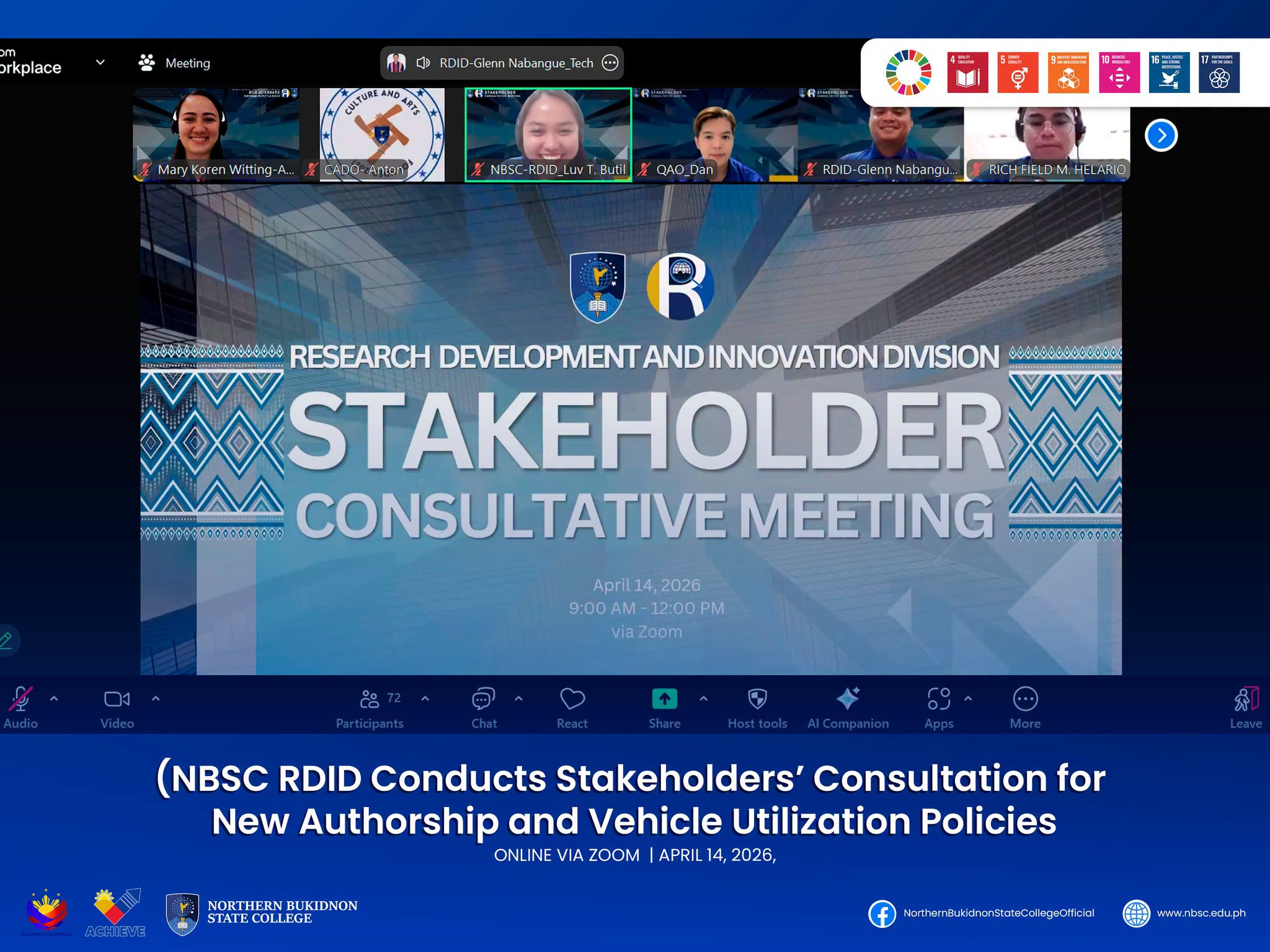
Northern Bukidnon State College’s Research, Development, and Innovation Division (NBSC-RDID) conducted a virtual stakeholders’ consultation on April 14, 2026, to discuss the proposed Authorship and Vehicle Utilization Policies.
Held via Zoom from 9:00 AM to 12:00 NN, the consultation served as a platform for faculty, staff, and students to gather insights, recommendations, and comments from the college community to strengthen and refine these foundational operational frameworks.
The proposed Authorship Policy is designed to foster a strong, ethical, and inclusive research culture by ensuring integrity, transparency, and fairness in the attribution of scholarly work. It provides a comprehensive technical and ethical framework for researchers – including faculty, staff, and students – to make defensible decisions regarding authorship at every stage of the writing and publication process. This policy is anchored on significant legal bases, such as the Intellectual Property Code of the Philippines and the Data Privacy Act of 2012, to align institutional practices with national and international standards.
Simultaneously, the RDID presented the proposed Vehicle Utilization Policy, which governs the efficient and accountable use of the division’s assigned van and coaster. The policy ensures that these institutional resources are used strictly for authorized purposes, such as research fieldwork, data collection, and monitoring activities. It emphasizes strict adherence to the New Government Procurement Law and Commission on Audit (COA) regulations to safeguard government property and promote transparency in divisional operations.
Both policies explicitly emphasize gender equality and inclusivity, ensuring that all qualified personnel and students have equal access to institutional resources and professional recognition. RDID Director Dr. Mary Koren Witting-Acuesa, who spearheaded the initiative, noted that such consultations promote collaboration and ensure that administrative policies remain aligned with the college’s broader institutional initiatives.
By institutionalizing these guidelines, the college strengthens its internal structures for knowledge production and logistical management. This proactive refinement of policy ensures that the academic community operates within a clear, ethical, and standardized landscape, ultimately elevating the quality and sustainability of the institution’s contributions to the broader scientific and developmental ecosystem.